
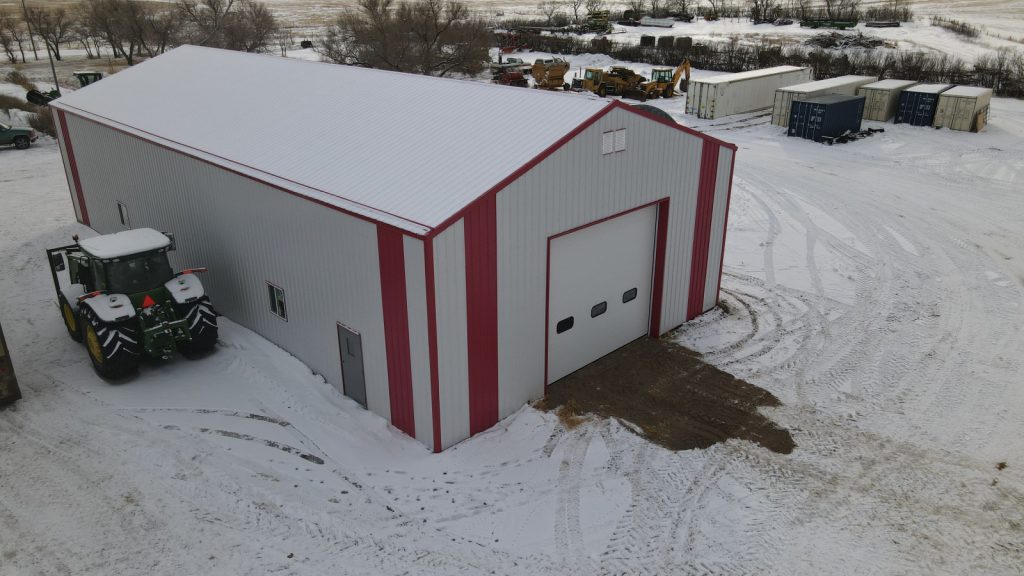
At Blue Hills Construction, we get a lot of calls from folks who want more than just a storage barn. They want a building they can actually work in when it’s -30°C outside. Creating climate-controlled pole buildings in Saskatchewan and Alberta is completely achievable, but doing it right means making smart decisions during the design phase, not as an afterthought once the structure is already up.
Start by Deciding What “Climate-Controlled” Actually Means for You
Not every building needs full heating and cooling. Matching your climate control system to your actual use case saves money and avoids overbuilding.
- Equipment storage: Insulation alone can keep temperatures above the damage threshold for machinery and fluids. A full HVAC system is usually overkill.
- Workshops and garages: You’ll want reliable heat. Supplemental cooling is rarely necessary in our climate, but proper ventilation matters year-round.
- Livestock buildings: Moderate temperatures and strong mechanical ventilation are the priority. Animals generate heat, so the goal is air quality management as much as temperature control.
- Commercial or office space: Full HVAC with both heating and cooling is the right call.
Get clear on your use case before any other decision gets made. Everything else flows from that.
Insulation Is Where Climate Control Actually Starts
The best heating system in the world can’t compensate for a poorly insulated building envelope. In prairie conditions, insulation does double duty: it slows heat loss in winter and limits heat gain during hot summers.
R-Value Targets for Heated Prairie Buildings
- Walls: R-19 minimum, R-30 or better if the building will be heated consistently
- Roof/ceiling: R-30 minimum, R-50 or better for heavily used heated spaces
Insulation Types Worth Knowing
- Spray foam: Strong air-sealing performance, high R-value per inch, and naturally moisture-resistant. Ideal for buildings where air infiltration is a real concern.
- Fiberglass batts: More budget-friendly and widely available, but they need a properly installed vapour barrier to perform in cold climates.
- Rigid foam board: A practical choice for the floor perimeter and concrete slab edges, where thermal bridging is common.
The insulation type you choose affects how the vapour barrier gets installed, so these decisions need to happen together.
Learn all about pole barn construction.
Vapour Barriers and Ventilation: Managing Moisture in Prairie Climates
Extreme temperature swings are one of Saskatchewan’s trademarks, and they create real condensation risk inside any insulated building. A vapour barrier belongs on the warm side of the insulation, which is the interior side in our climate. That part is straightforward. What trips people up is thinking a tight, well-insulated building doesn’t need ventilation. It does.
Even in a heated workshop, moisture from breath, equipment, and temperature changes needs somewhere to go. A few options worth considering:
- Passive ventilation: Ridge vents combined with soffit vents create natural airflow without mechanical equipment.
- Mechanical ventilation: Required in livestock buildings and recommended anywhere occupancy is regular and sustained.
- Mini-split systems: These handle both heating and cooling while moving air continuously. They’re increasingly popular in workshops and smaller commercial spaces.
Sealing a building without a ventilation plan is one of the most common mistakes we see. The result is condensation on walls and ceilings, mould risk, and premature deterioration of interior finishes.
Heating Systems Matched to How You Use the Space
There’s no single right answer here. It depends on your use case, your energy source, and your budget.
- Unit heaters: Practical and cost-effective for workshops. They heat large volumes of air quickly and run on propane or natural gas.
- Radiant in-floor heating: Efficient and comfortable, with even heat distribution across the floor. Higher upfront cost, but worth it in buildings used daily.
- Forced air furnace: Familiar technology that handles large spaces well and integrates easily with ductwork.
- Wood or pellet stoves: A viable supplemental heat source in rural settings where wood is accessible and the building isn’t occupied continuously.
In many rural locations, propane is the only realistic fuel source. Factor in availability and delivery cost, not just equipment price.
Plan for Climate Control During the Build, Not After
This is where the structural side of things matters. Our steel True Column post construction eliminates wood-to-ground contact, which directly reduces the moisture risk that can compromise insulation and interior finishes over time. That foundation of durability matters more once you’re adding a finished, insulated envelope.
Beyond the structural system, a few things need to be planned before the walls go up:
- Electrical rough-in for heating, cooling, and lighting runs before insulation goes in
- Interior finishing material such as OSB or drywall to contain the vapour barrier and insulation properly
- Placement of vents, doors, and windows factored into the insulation strategy
Retrofitting climate control into an existing pole building is possible, but it costs more and delivers less than building it right the first time.
Build It Right From the Start
A climate-controlled pole building is a straightforward goal in Saskatchewan and Alberta. The climate just demands that you take insulation, moisture management, and mechanical systems seriously from day one. At Blue Hills Construction, we build the durable structure that makes all of it possible. If you’re thinking through a workshop, barn, or commercial building that needs to work year-round, give us a call at 306-517-6610 and let’s talk through what your building actually needs.